
HOW IS YOUR ROOM SET UP?
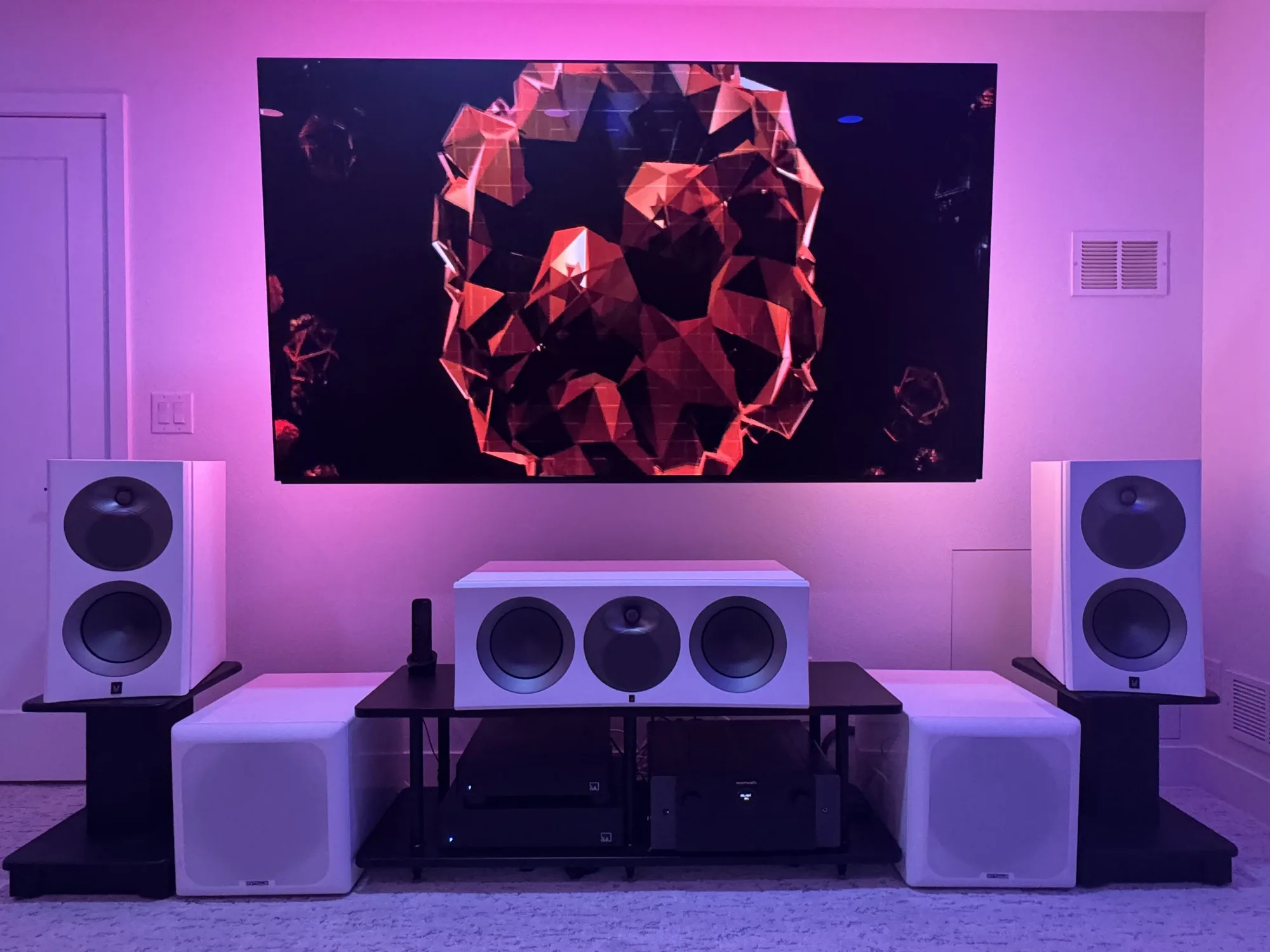
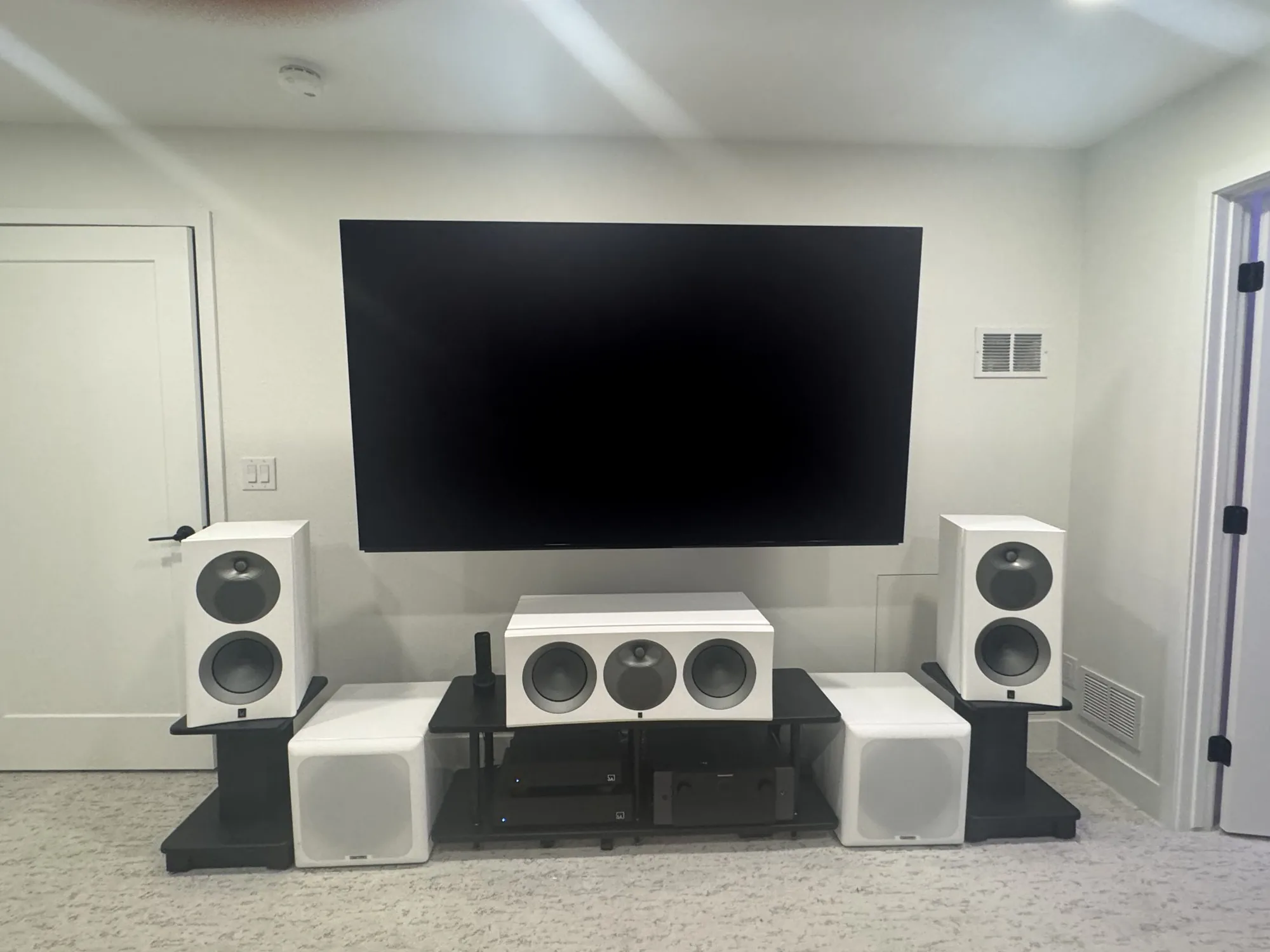
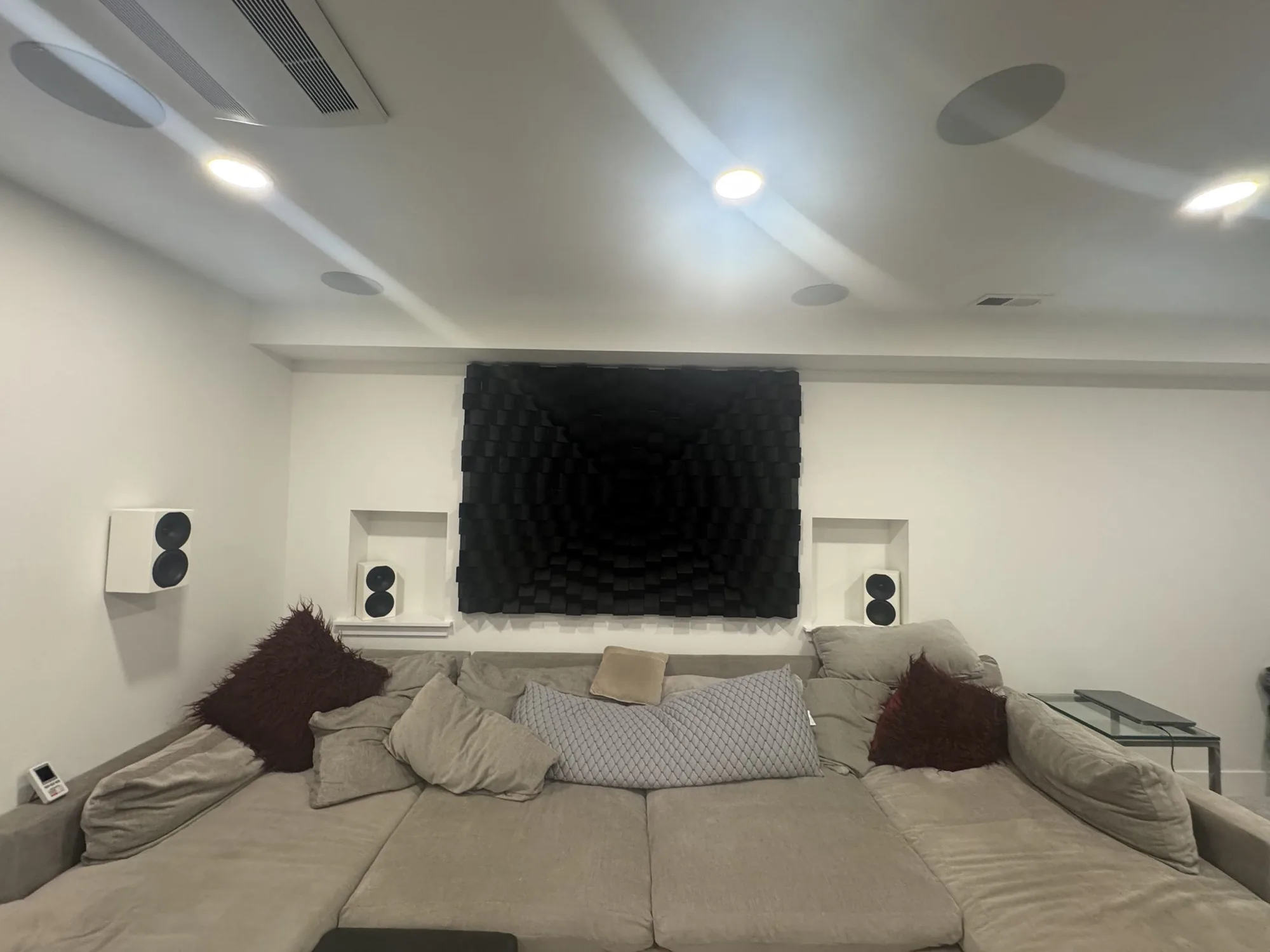
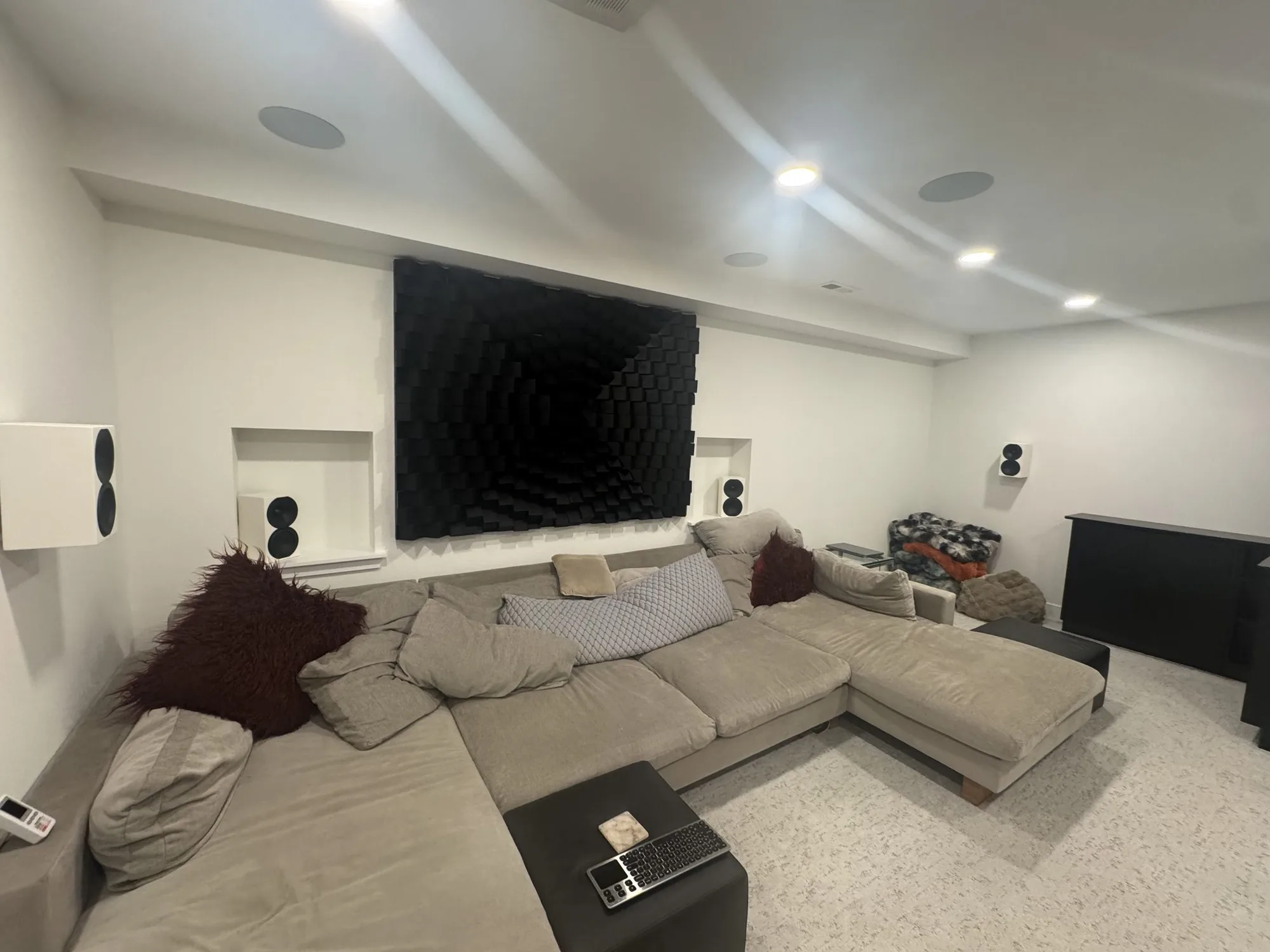
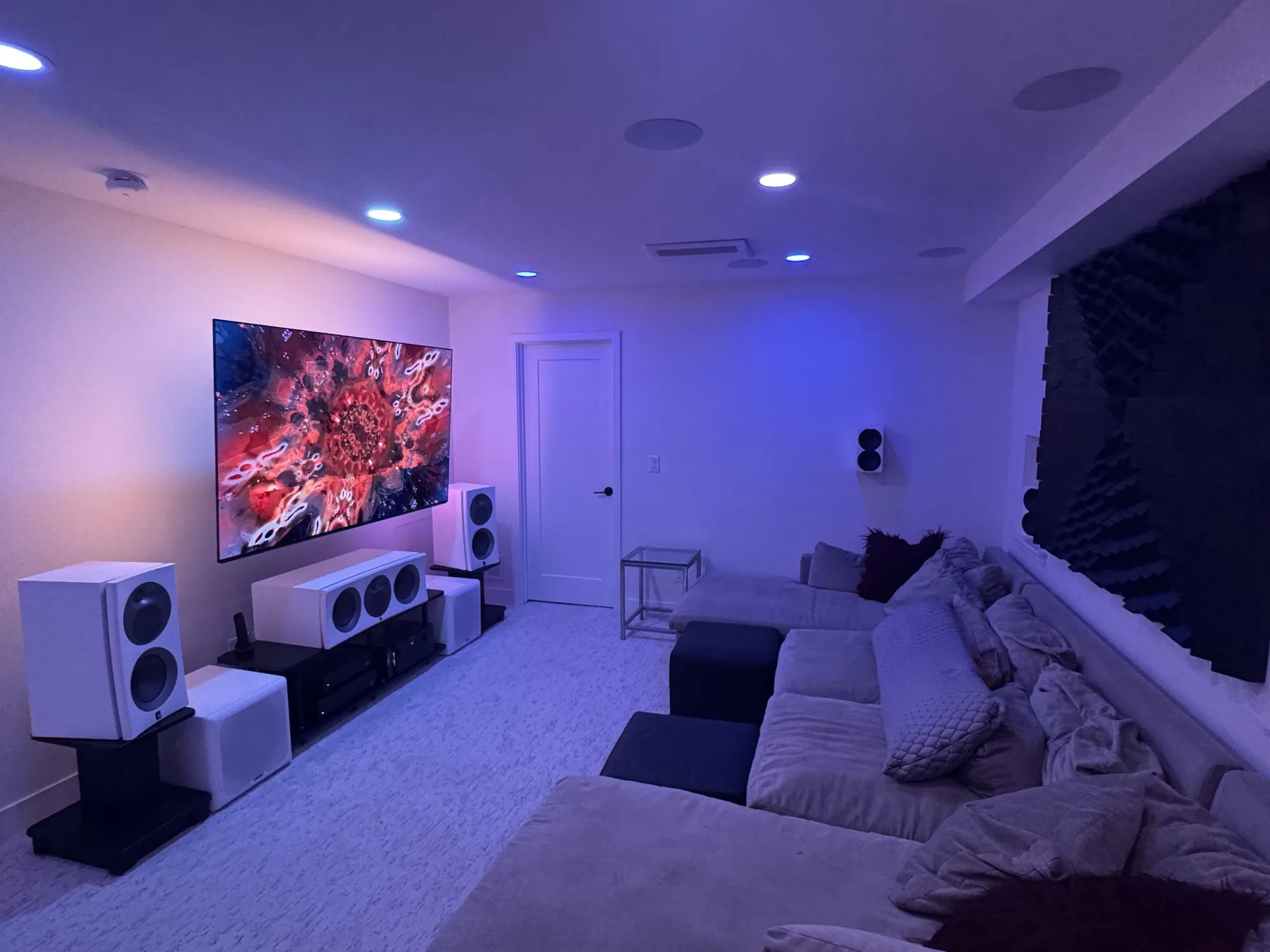
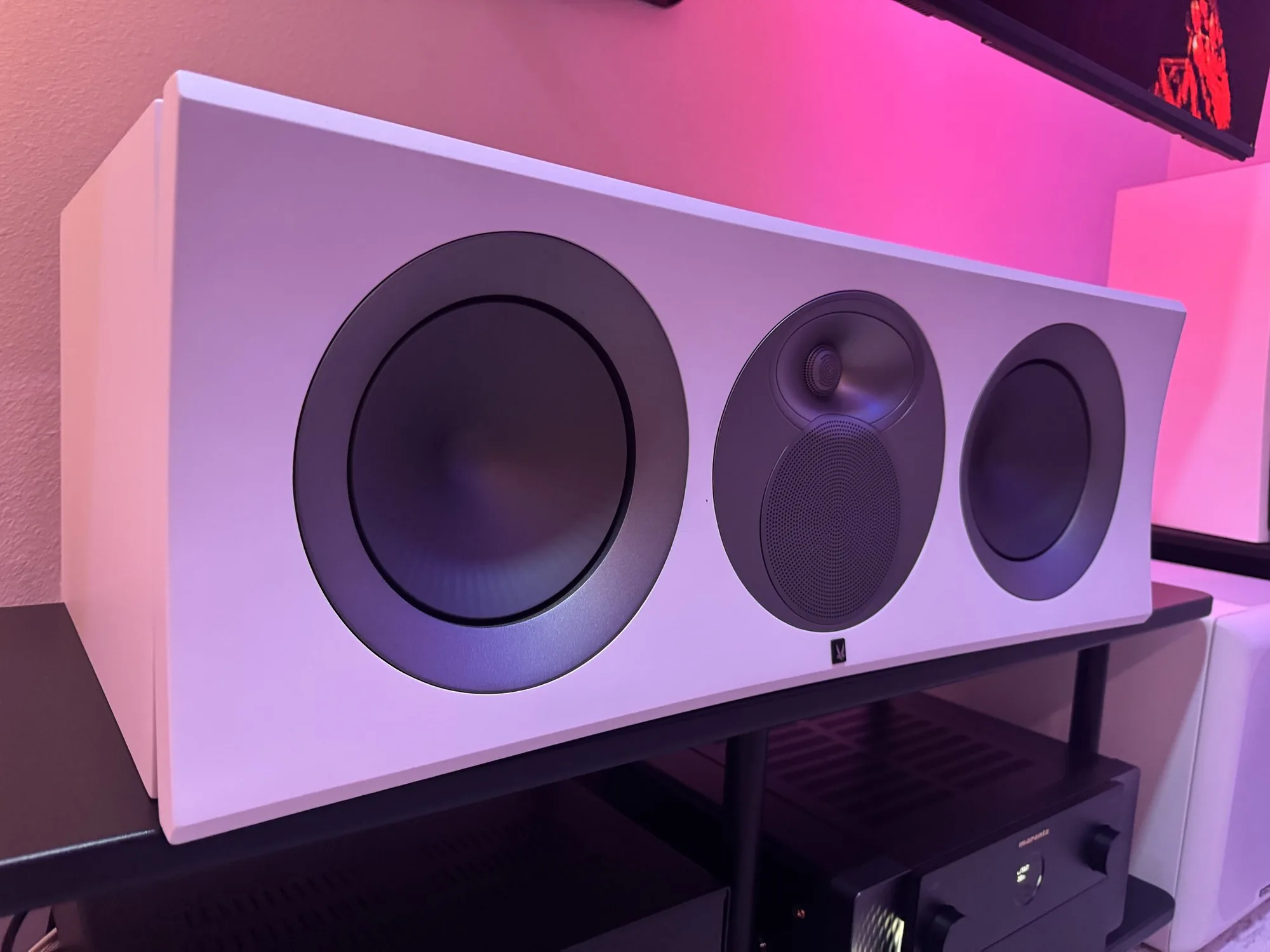
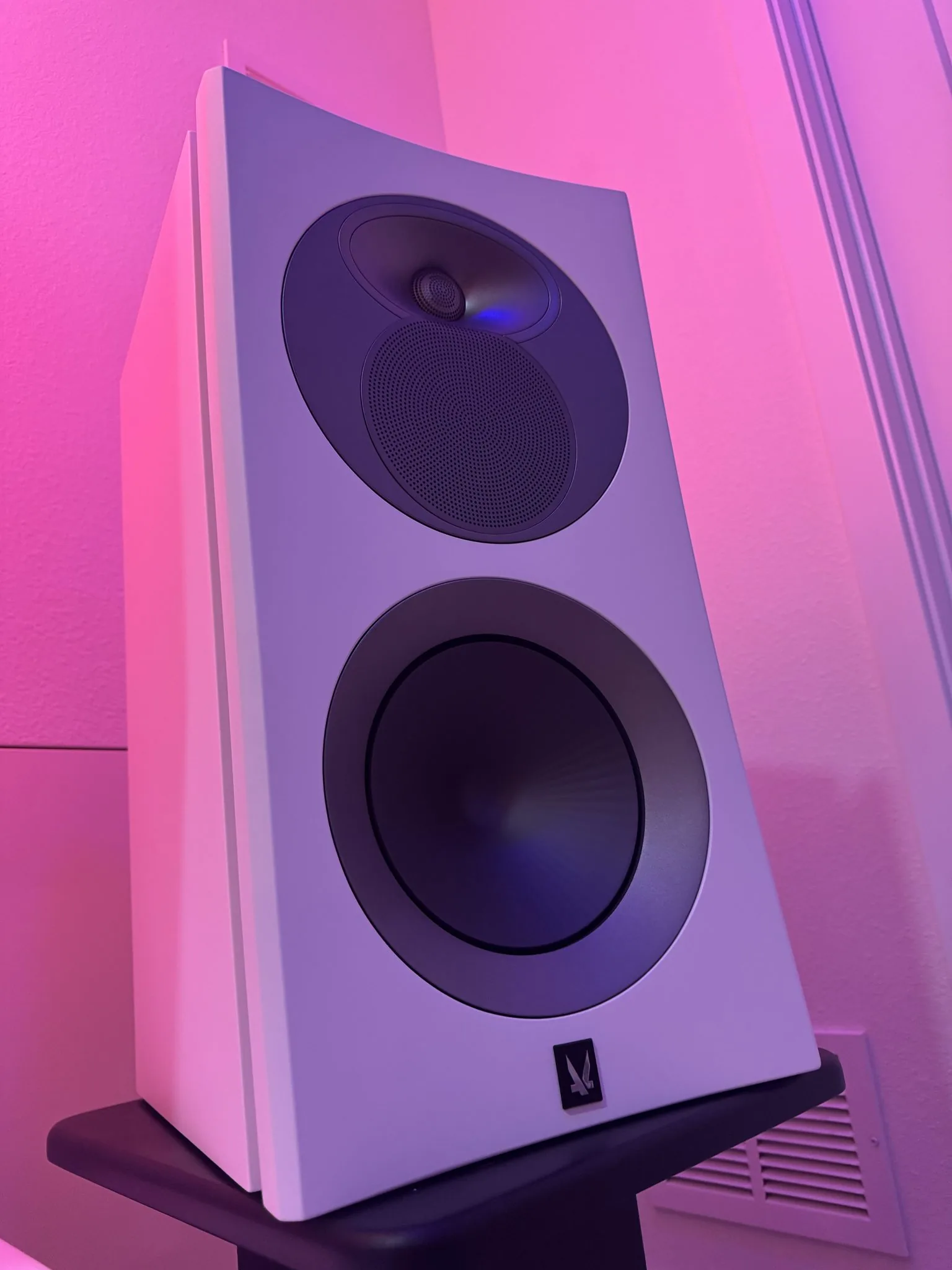
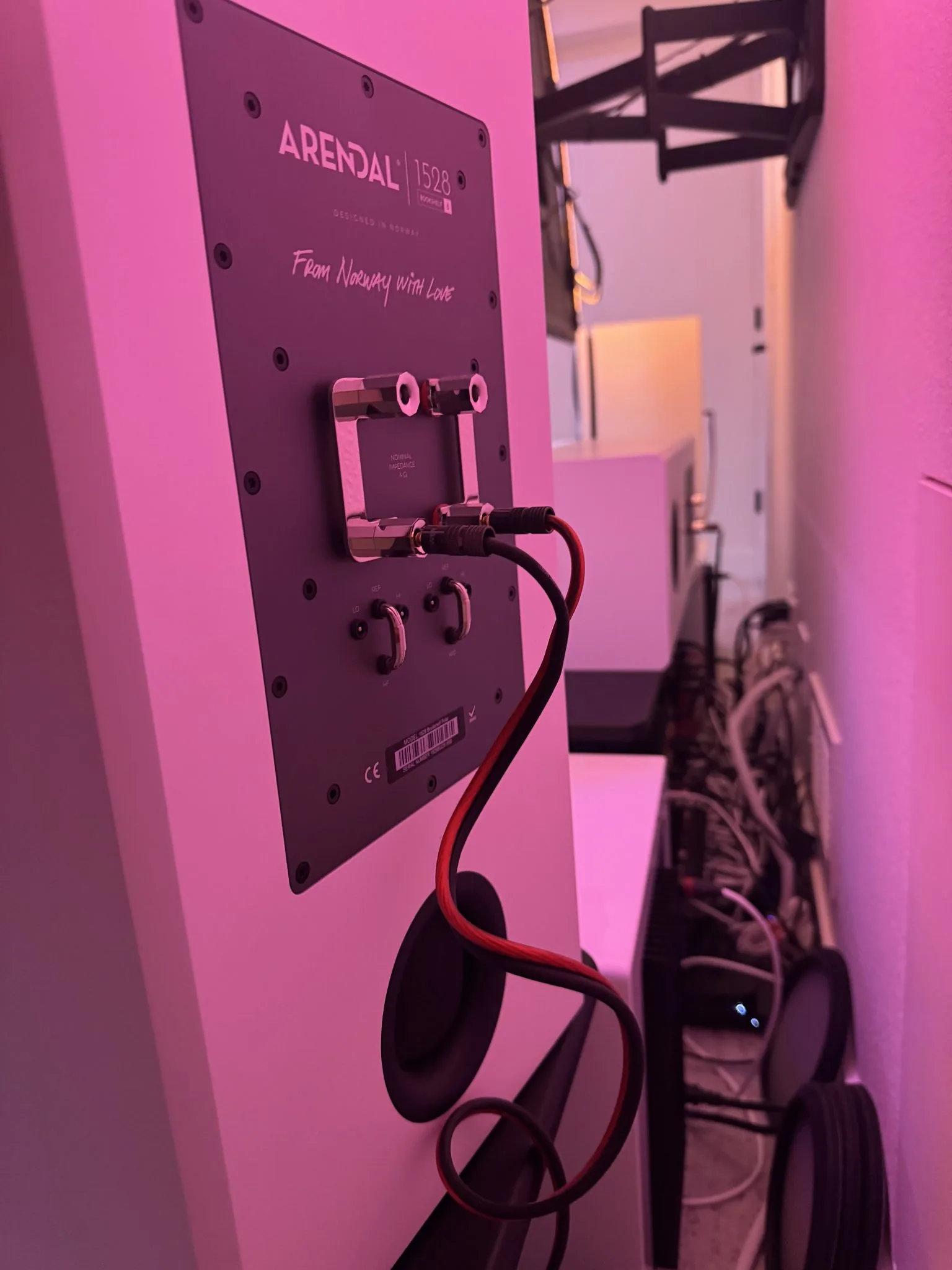
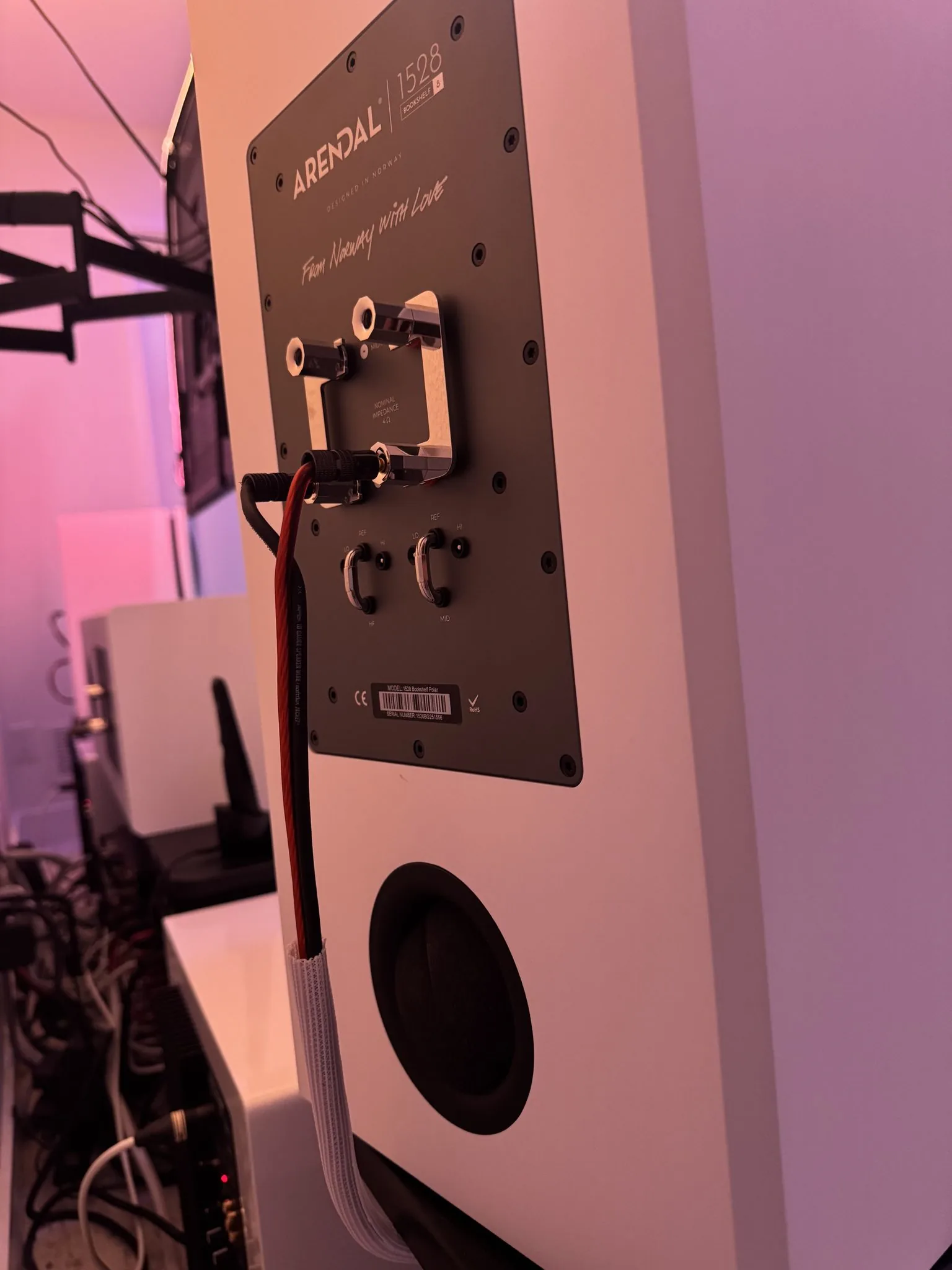
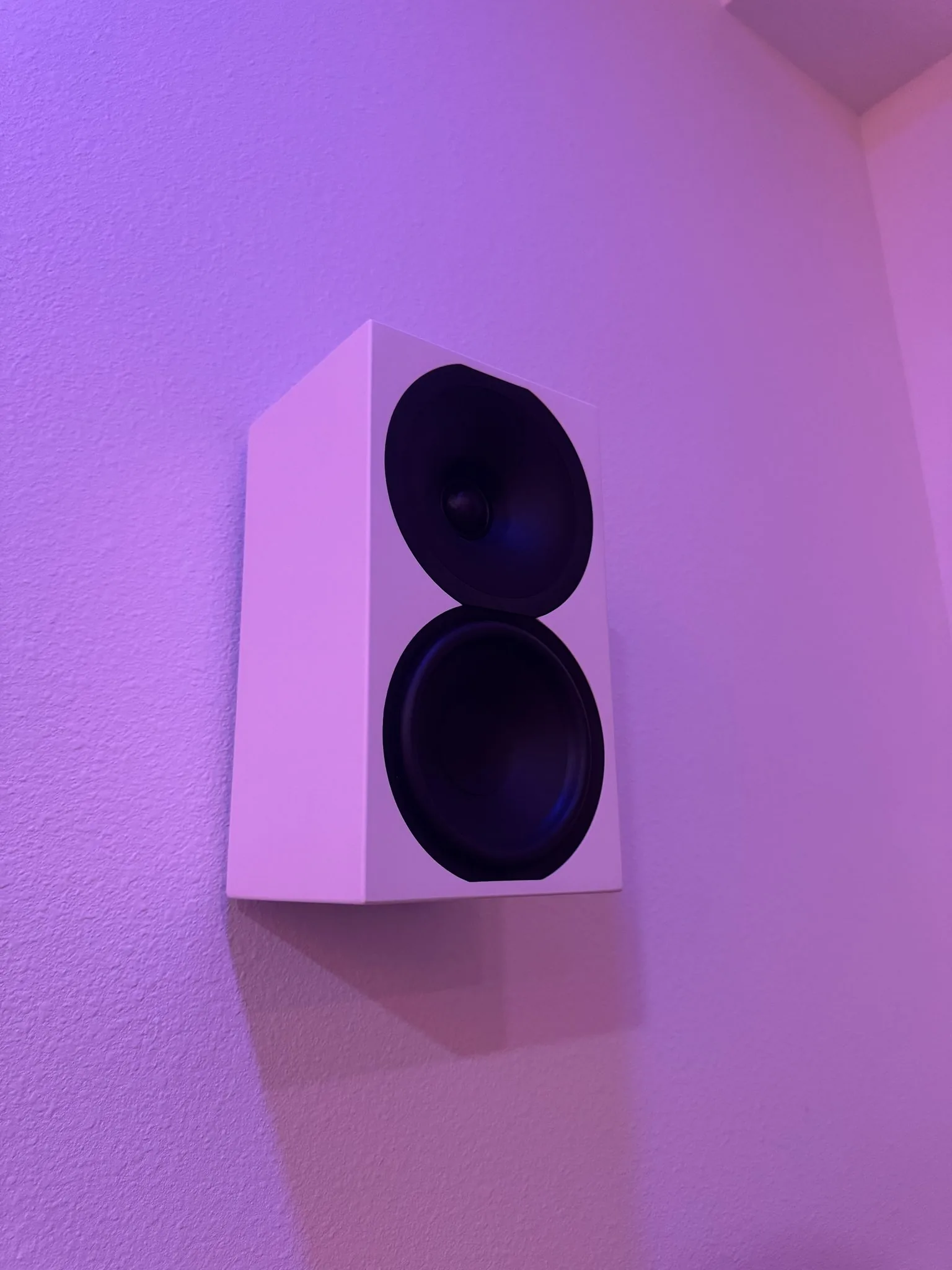
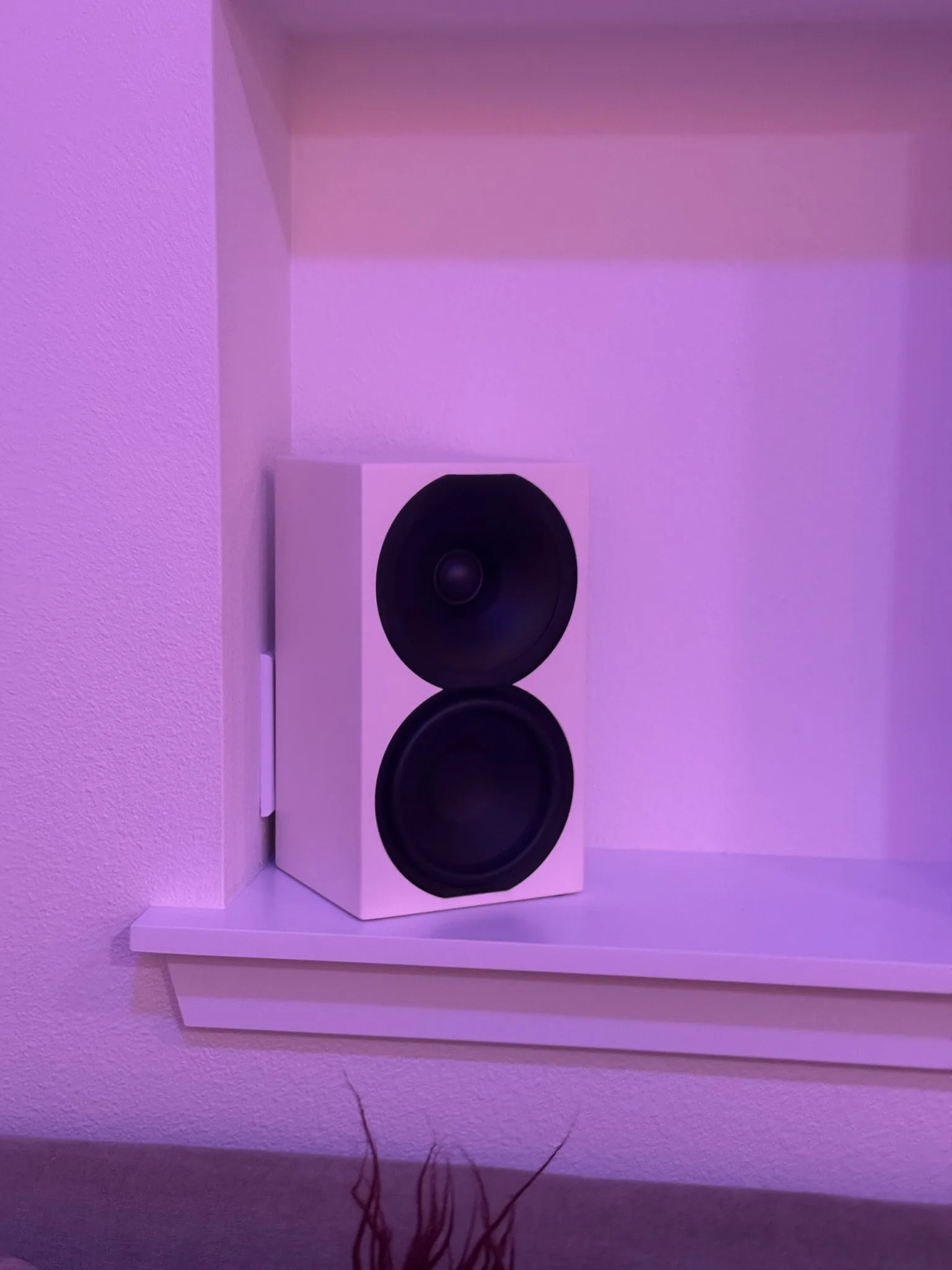
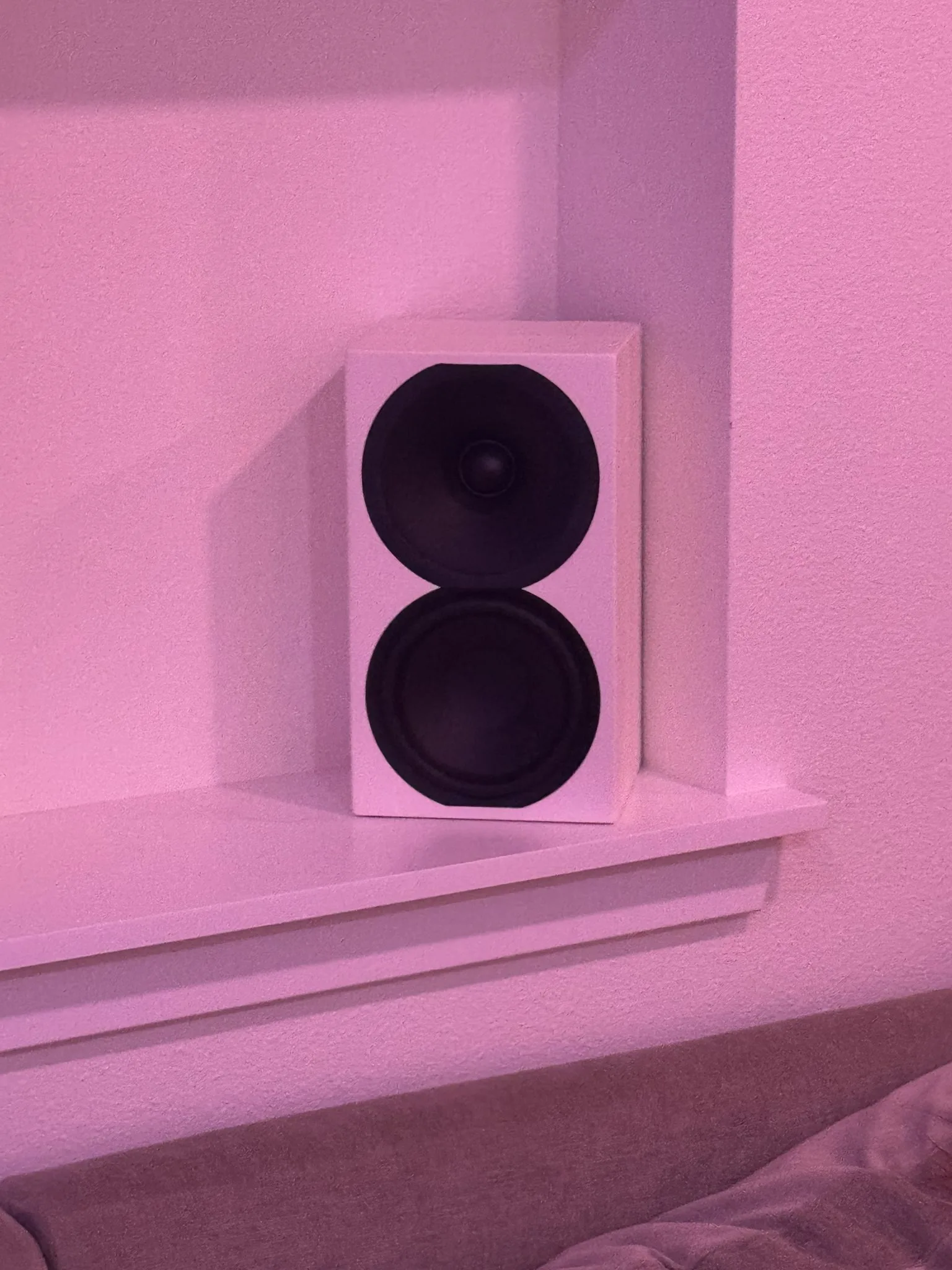
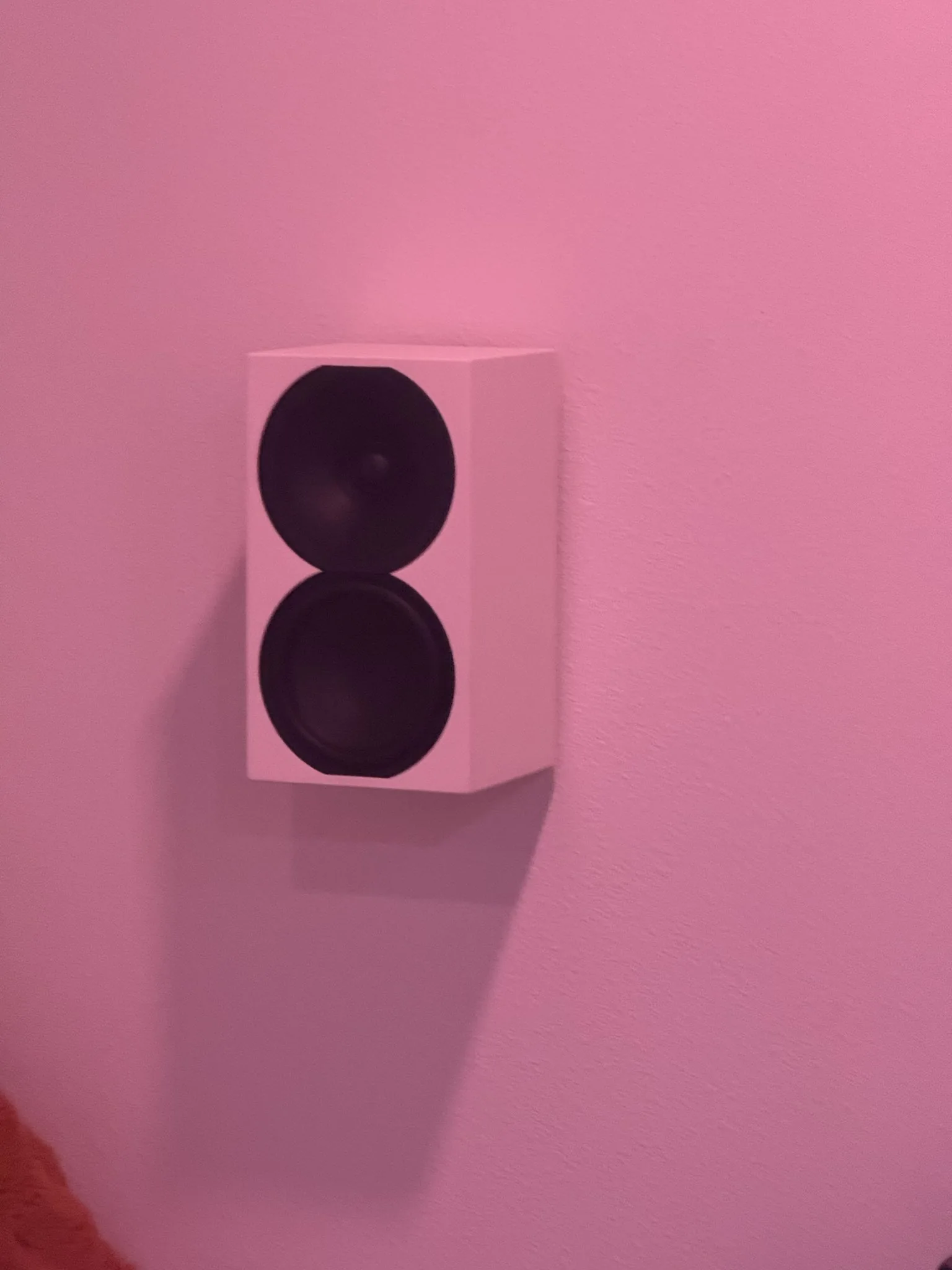
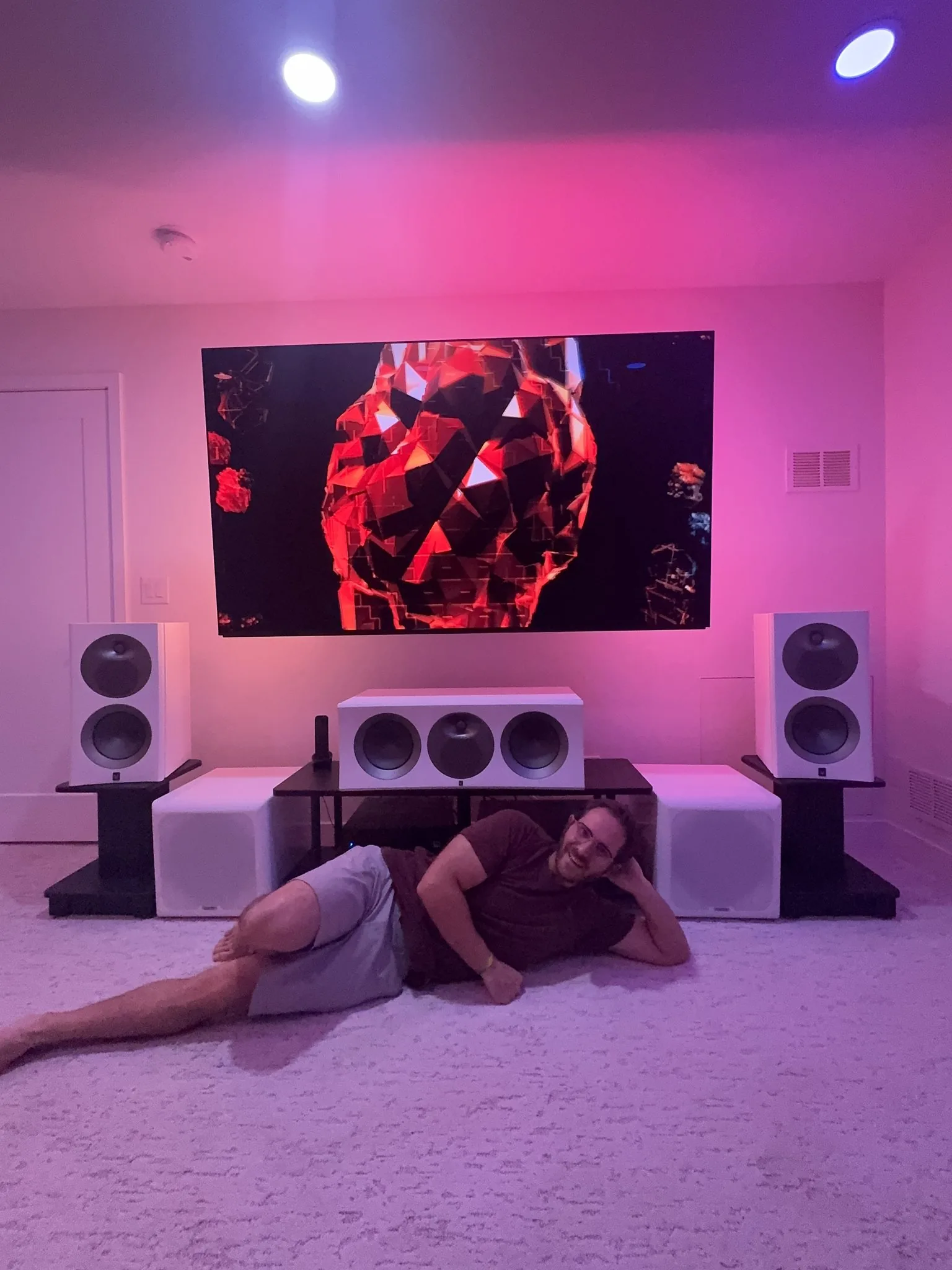
Dedicated basement home theater in Englewood, Colorado, purpose built during a full basement renovation. The room is 13.4 ft x 20.2 ft x 8.1 ft, roughly 2,190 cubic feet, with insulated framed stud walls & ceilings with thickest rockwool insulation inside the concrete foundation and a drywall ceiling. It is set up as a 7.2.4 Atmos system: Arendal Sound 1528 left, center and right across the front wall, four Arendal Sound 1961 Surrounds, four in-ceiling height channels and two sealed 12 inch servo subwoofers (2x Rythmik F12s). Seating is a U-shaped sectional with the main listening position about 10 ft from the screen wall and 5.5 ft from the left wall, and the room is used about evenly for movies, upmixed music listening (Auro-3D) and for serious two-channel music listening, so the front three were chosen for music first and cinema second.
WHAT WAS YOUR GOAL WHEN LOOKING FOR NEW SPEAKERS AND SUBWOOFERS?
This was my first purpose built room, so the goal was to buy once and not be shopping again in five years. Everything before this lived in a shared living space, and what was missing was headroom and honesty at volume: bass that ran out somewhere around 40 Hz, a front stage that started to compress and harden as soon as a movie got loud, and imaging that was always a compromise with furniture and placement. I wanted three specific things. Cinema level dynamics with no strain at reference volume, bass that measures flat and stays tight down into the low 20s rather than sounding boomy, and a front three good enough that I would happily sit down and listen to two-channel music with the display turned off.
WHERE DID YOU HEAR ABOUT US?
Nemo Audio Project & Jay’s Iyagi on YouTube first! From there I went down the YouTube rabbit hole and worked through the review and measurement focused channels covering the 1528 and 1961 series. What caught my attention was that the measured performance held up under scrutiny instead of falling apart the moment someone put the speakers on a proper test rig, and that the off axis behavior was as clean as the on axis response, which matters enormously in a small dedicated room where the walls are close.
WHY DID YOU CHOOSE ARENDAL SOUND?
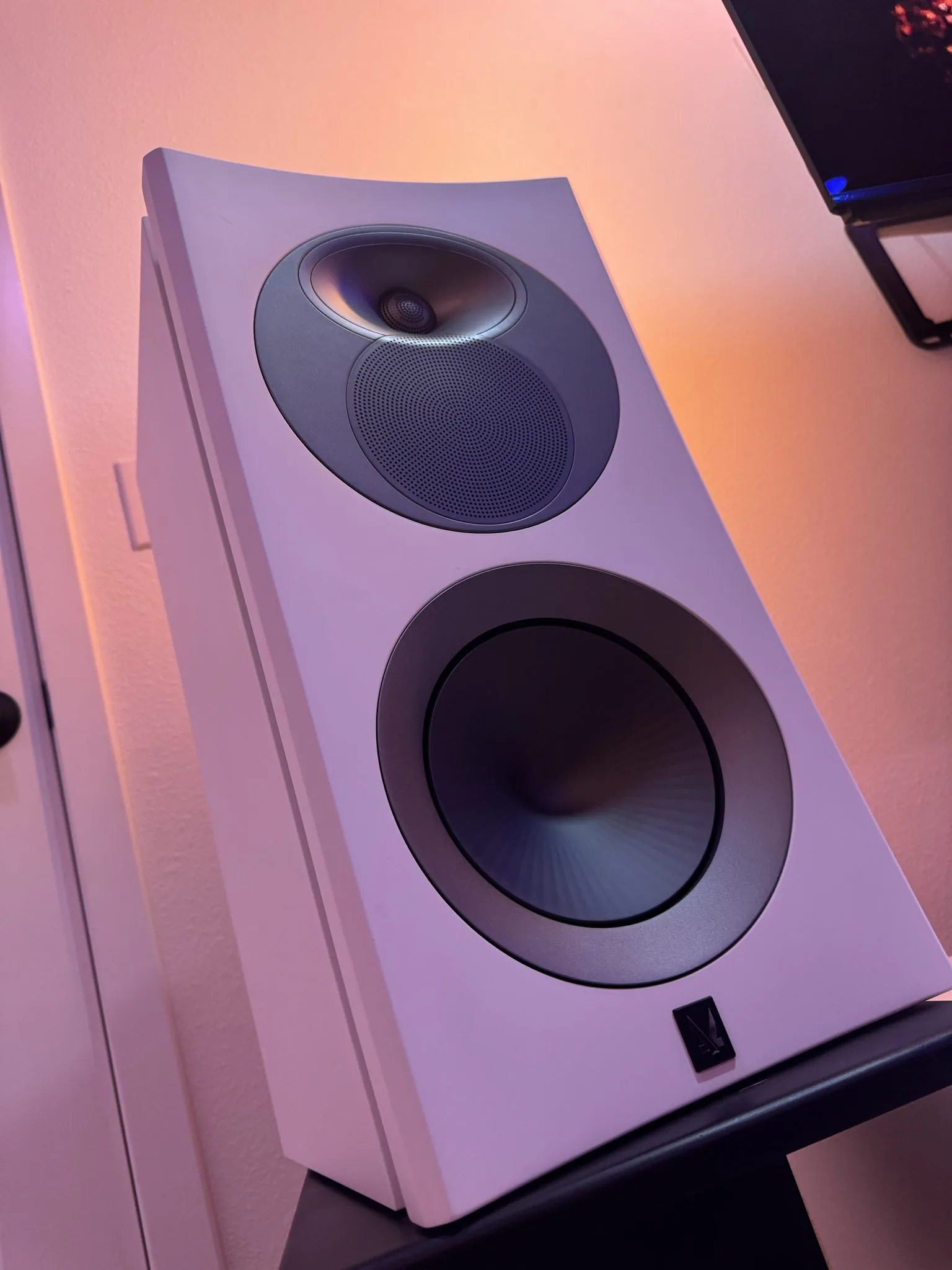
Three things decided it. First, the engineering is measurement led and the data is published rather than hidden behind marketing language, which made it possible to predict how the speakers would behave in my specific room instead of hoping. Second, the direct to consumer model put a genuinely over built cabinet and driver set in my room at a price that would have bought me far less speaker through a traditional dealer chain, and in a 7.2.4 system that difference multiplies across eleven speakers. Third, being able to run a full system from one family, 1528 across the front and 1961 for surrounds, meant timbre matching that no mixed brand system was going to give me. Design mattered too. The cabinets look like furniture rather than a science project, which was not optional in a room my whole family uses.
YOUR EXPERIENCE WITH THE PRODUCTS?
Build quality registers before you ever play anything. The boxes are heavy, the cabinets are inert, a knuckle rap gives you nothing back, and the finish is clean enough that the speakers look intentional in a finished room rather than tolerated. Sonically the front stage is effortless. Dialogue through the 1528 center stays intelligible at low volume and never turns shouty or hard when a film gets loud, and the left and right hold their imaging well enough that I listen to two-channel music in this room with the display off, which was the test I cared most about. The 1961 Surrounds timbre match the fronts closely enough that objects panning across the room do not change tone as they move, which is the thing that usually gives away a mixed brand system. I run the 1528s sealed with the port plugs installed and cross everything over at 80 Hz, and that combination gave me a tighter, better defined midbass and a cleaner handoff to the subwoofers than I expected. Compared to the living room based systems I ran before this, the gap is not subtle: same content, same volume, far less strain and far more information.
Two things. First, how well the speakers took room correction. Because their off axis behavior is even, Dirac Live had a consistent target to work with, and the corrected result sounds natural and open rather than processed and squeezed. I have heard plenty of systems where correction fixes the measurement and kills the life in the sound, and that did not happen here. Second, how completely they refuse to complain when pushed. I expected to find a ceiling at reference level in a 2,190 cubic foot room and I have not found it yet. The speakers simply get louder without hardening, compressing or drawing attention to themselves, which changed how I watch films: I stopped riding the volume knob during big scenes.
WHAT ELSE DOES YOUR SYSTEM CONSIST OF?
- Processor / AVR: Marantz AV20 13.4 channel processor running Dirac Live Room Correction with Bass Control and Active Room Treatment (ART).
- Amplifier: Purifi based power amplifier on the LCR channels (balanced XLR), Hypex based power amplifier on the four surrounds and four ceiling height channels (balanced XLR).
- Source devices: Apple TV 4K (4K SDR, Match Dynamic Range and Match Frame Rate on), gaming PC, Steam Deck in a dock, streaming via native apps, and HEOS on the Marantz for music only sessions so I am not running the OLED just to hear a record.
- Subwoofer: two Rythmik F12SE sealed 12 inch servo subwoofers, crossover bypassed and set to the 14 Hz extension filter, with all crossover duty handled by the Marantz at 80 Hz.
- Other: balanced XLR interconnects throughout the pre-out to amplifier path, rockwool insulated wall cavities, and gain matching between the two amplifiers to account for their different input sensitivities.
- Display: Sony A95L 85 inch QD-OLED with a Philips Hue Sync Box 8K in the signal path for bias lighting.
- Future upgrades: continued Dirac ART tuning, more broadband absorption at the first reflection points, and I am seriously considering adding a second pair of subwoofers to smooth out the modal response across the seating row.
HOW HAPPY ARE YOU WITH ARENDAL SOUND PRODUCTS?
Extremely happy, and specifically happy in the way that matters: I stopped thinking about the speakers. The system does what I built the room to do, whether that is a Dolby Atmos/Auro-3D mix at reference level with the family in the room or a quiet two-channel session at the end of the day, and it never asks me to make excuses for it. If I were starting the build over tomorrow with the same budget, I would order the same speakers without shopping around, and that is the highest compliment I can pay a purchase this size.
ANYTHING ELSE YOU’D LIKE TO SHARE?
This room was a long time coming. It started as an unfinished basement and turned into a proper dedicated theater, and the speakers were chosen before the walls went in so that placement, wiring and treatment could be designed around them instead of the other way around. The part I did not anticipate is how much of the payoff has been social rather than technical. The measurements and the Dirac work are satisfying to me, but the moment that made it worth it was watching people who do not care about audio at all sit down, get about ten minutes into a film, and stop talking. That is the whole point of a system like this, and it is what I would want to show anyone who is considering Arendal.
Setup details
| Build year: | 2025 |
|---|---|
| Products: | 1528 Bookshelf 8, 1528 Stand 8, 1528 Center 8, 1961 Bookshelf |
| Location: | USA |
Get in touch with Austin
Have a question about the setup, or would you like to hear it in person?
Send Austin a message.